Takeaway:
• A routine optometrist visit typically includes a visual acuity check, eye health screening, and a prescription update for glasses or contacts.
• The American Optometric Association recommends comprehensive eye exams at regular intervals based on age and risk factors.
• Services commonly offered at an optometry practice include routine exams, contact lens fittings, and treatment for dry eye or digital eye strain.
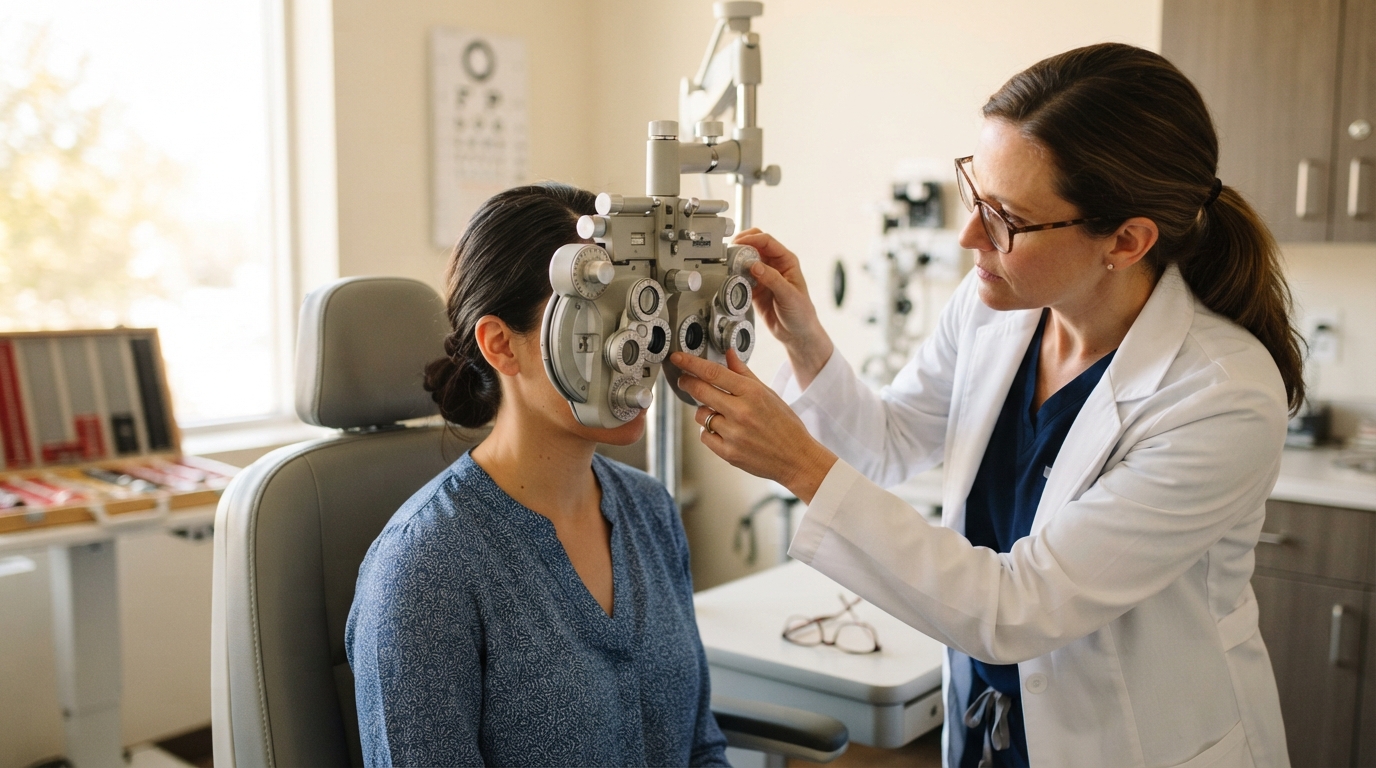
An optometrist visit generally involves a sequence of standardized vision and eye health tests designed to catch problems before symptoms appear, followed by a discussion of findings and any prescription changes. Most appointments last between 30 and 60 minutes depending on whether additional testing, such as dilation or imaging, is included.
Scheduling a visit with an optometrist is one of the more accessible ways to monitor both vision clarity and broader eye health, since these exams can also flag early signs of conditions like diabetes or high blood pressure. Residents of Fallbrook, CA often look for a practice with modern diagnostic equipment and flexible scheduling when choosing where to have routine exams performed. Visit Temecula eye center in Fallbrook to book a comprehensive exam and take a proactive step toward protecting your sight.
What Happens During a Standard Exam
A comprehensive eye exam follows a fairly consistent structure, regardless of which optometry office a patient visits. According to the American Optometric Association, preliminary testing typically starts with evaluations of depth perception, color vision, and pupil response before moving into more detailed assessments.
Common steps include:
1. Patient history review – discussion of vision complaints, medications, and family eye health history.
2. Visual acuity testing – reading letters at varying sizes to measure sharpness of vision at different distances.
3. Eye muscle and focusing tests – checking how well the eyes move together and adjust focus.
4. Eye health evaluation – using a slit lamp or similar tool to inspect the cornea, lens, and retina for abnormalities.
5. Prescription determination – refining lens power for glasses or contacts if correction is needed.
The doctor assesses and evaluates the results of the testing to determine a diagnosis and develop a treatment plan, then discusses any visual or eye health problems found and explains available treatment options.
How Often Eye Exams Are Recommended
Exam frequency depends on age and risk category rather than a single fixed schedule. For patients aged 18 through 64 who are asymptomatic or low risk, the recommended interval is at least every two years, while at-risk patients in the same age range are advised to be seen at least annually or as recommended by their doctor.
| Age Group | Risk Level | Recommended Interval |
| 18-39 years | Low risk | At least every two years |
| 18-64 years | At risk (diabetes, high myopia, etc.) | At least annually |
| 40-64 years | Low risk | At least every two years |
| 65+ years | Any | Annually |
Children also follow a distinct schedule separate from the adult guidelines, with formative exams recommended in infancy, early childhood, and then annually through the school years.
Services Commonly Offered by an Optometry Practice
Eye care practices in the region typically combine routine exams with specialty services addressing specific vision concerns. Verified offerings at an optometry practice in this category can include:
• Routine and comprehensive eye exams
• Diabetic eye exams
• Contact lens fittings, including orthokeratology options
• Treatment for dry eye and digital eye strain
• Pediatric vision care
• Eyeglass and frame selection
Based in Temecula, CA, Temecula Eye Center Optometry serves patients across Fallbrook, CA, offering a point of access for residents who prefer not to travel farther into other parts of the region for routine or specialty eye care.
Frequently Asked Questions
What should someone bring to an optometrist appointment? Current glasses, contact lenses, a list of medications, and insurance information are typically requested at check-in, along with any relevant family eye health history.
Does a routine exam include pupil dilation? Not every visit requires dilation, but it may be recommended periodically to allow a clearer view of the retina and other internal structures.
Can an optometrist detect health issues unrelated to vision? Yes. Eye exams can sometimes reveal early indicators of systemic conditions such as diabetes or hypertension, since blood vessels in the eye can show related changes.
How long does a typical comprehensive exam take? Most comprehensive exams take between 30 and 60 minutes, though additional testing or treatment discussions can extend the appointment.
Finding a Local Provider
Readers evaluating options in the area can View Temecula Eye Center Optometry on Google Maps for published hours and contact information.